DOT Regulations

Blue semi fleet

What impact do DOT regulations have?

We touched on it briefly in our “Is there a Driver Shortage?” blog. Today we will give you a little more insight into the specifics of government regulations and the impact it is having on the freight industry.

About 85 years ago, the first hours of service (HOS) rules were released. The Interstate Commerce Commission allowed 10 hours of driving time, 8 hours off duty time, 60/70 hours in 7/8 days, and drivers could run a split sleeper in two break periods. Since then, HOS laws have been through numerous court challenges, Congressional interventions, and countless changes.

Starting in the 2000s some major changes were set in motion- some of which were fought in court and were ultimately denied by the court system; others were implemented over the years. One significant change was to the number of hours allowed in each driver status. The hours changed to 11 hours of driving in a 14-hour window and 10 hours of off duty time. At the same time, the 34-hour reset was implemented. This allowed a driver’s hours to reset after 34 consecutive hours off duty. There were many other rule changes added, modified and removed throughout the decade.

The next, and most recent, major law change was the requirement of electronic logging devices (ELD). In December of 2017, the ELD rule went into effect with a two-year grace period for fleets using automatic onboard recording devices to monitor HOS. The requirement of ELDs made it easier to track HOS and increase compliance with those regulations.

That’s a lot of information, but what does that mean to you?

To keep it simple: it means more rules trucks have to follow that could impact the speed in which freight is delivered.

But, it’s not all bad.

These regulations were put in place to improve the safety of truck drivers and the public. While there is a lot of controversy surrounding these changes, the intentions are in the right place. However, it’s had an impact to the freight industry.

Drivers, who once pushed their limits with driving as many miles as possible over the course of a week, are now limited to whatever they can do in 11 hours of driving time. But they only have a 14-hour window to do it in. What does that mean? If it takes 4 hours to get loaded at a shipper, the driver now only has 10 hours to drive. They are also required to take a 30-minute break after 8-hours of work, which means they really only have 9.5 hours to drive. Add in the pre-trip inspection and they are likely down to 9 hours of driving time. The amount of miles you can drive in 9 hours is obviously less than 11 or 12 hours.
It also means drivers tend to have less patience. Most get paid by the mile, not by the hour. So when they are at your dock asking when they will get loaded multiple times, it’s because most aren’t getting paid to sit around and wait. Unless their wheels are moving, their bank accounts aren’t growing.

It’s important that everyone in the industry understands this. If we all work together and understand the barriers drivers face, it will improve the flow of the supply chain for everyone. After all, we need the trucks and drivers just like they need all of us.

What is happening in the market?

Will rates ever return to pre-covid trends?

The short answer- probably not. Like most industries, logistics and transportation still feels the seasonal trend changes it did prior to the COVID pandemic. The problem is, rates skyrocketed drastically when the pandemic hit and to think they will drop back down to a pre-pandemic level would be wishful thinking.

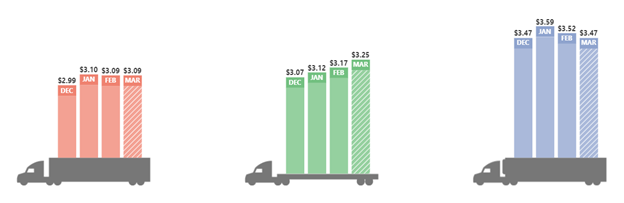
That doesn’t mean we won’t see the traditional dips in various seasons or markets. It just means, the dips likely won’t be as big as the climb. The good news? They may not drop, but they seem to be holding steady early in 2022 per DAT industry trends- depending on what you are shipping. Dry van and reefer rates have seen a slight decrease in spot rates, but flat beds have seen a significant increase.

DAT spot rates by equipment through the first week of March can be seen below.

*https://www.dat.com/industry-trends/trendlines

What is that doing to the rates?

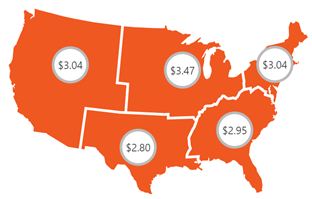
Well, it depends what location the freight is shipping outbound from. All areas have held fairly steady through 2022 so far, but the averages only paint part of the picture. Where you’re shipping from will show you the other part.

According to DAT, the average dry van rates are highest in the north, lowest in the south and in the middle on both coasts.

https://www.dat.com/industry-trends/trendlines

To top it all off, fuel continues to rise with the transpiring of the global events in Russia and Ukraine. National fuel prices have
increased 1% to $4.10 per gallon. This is going to drive rates up and will likely change the direction of the trends discussed above.

Long story short- expects rates to trend upward over the next several weeks due to fuel. If nothing else, they will flatline, but you need to be prepared for significant rate increases over the short-term.

Can a 3PL save you money?

Can a 3PL help cut costs?

That’s a common question in the freight industry.

The answer is YES! Absolutely! 100% it can. But what’s the catch? Selecting the RIGHT 3PL for you and your business.

Insert Premier Global Transportation.

Our goal is to take as much off your plate as possible. We know our customers have plenty to do, so we want to take on as much as we can to allow them to focus on other aspects of the business. So, how can we save you money?

You know the saying- “time is money.” We can free up your time. It’s that simple. We will take on the difficult, time-consuming task of finding the right carrier to move your freight and we are very diligent in the process. We utilize many different programs and tools to vet our carriers to ensure the best service possible. We handle that so you don’t to. We believe your time is better spent on other areas of your business.

We are in the business of moving freight. It’s what we do. It’s who we are. This is what we specialize in. Let us do what we do so you can focus on what you do. We promise we won’t let you down. Our goal is always to provide you with a smooth, flawless, and impeccable service with our expertise and proactive communication. We promise to keep you informed with the most accurate status update available to build an honest working relationship with you. Our goal is complete satisfaction on every shipment.

How do we uphold that promise? Here are the top reason:

8bEfxy8skS6fUVZnfaLWxj-1200-80

Resources.

We have invested in top of the line, customizable technology solutions. Do you want notified with an update every time it is entered in the system? Our system can do that for you. Do you require your paperwork to look a certain way with specific information included? Our developers can do that for us quickly and precisely. Do you have specific insurance, equipment, or load requirements? We can set our system to block any carrier that doesn’t meet those requirements for you to prevent service failure. Long story short- our system is customized for YOU.

People.

We pride ourselves on our top notch team of people. We hire intelligent, hard-working people who have the ability to learn, challenge themselves, and succeed in a very dynamic industry. We proudly have over 75 years combined industry experience, but at the same time, have a very diverse group of associates that aren’t afraid to bring new ideas to the table. Everyone has the same goal: help our customers be successful, no matter what it takes.

save-money

Cost.

It is no secret that freight costs have skyrocketed, specifically since the COVID pandemic. It is our mission to drive your costs down, but still pay carriers a fair wage (and make a little money ourselves, too). The key to that is our lucrative pay scale for our associates. They don’t have to worry about their personal finances through large margins on your freight. Instead, they can focus on driving your costs down knowing that they will be taken care of financially. We are only as successful as you are! Since the most common metric driving success in business is cost, let us help you save!

Let us prove it to you. Give us a call at 513-575-7645 or email us at info@premier-globallogistics.com

Is there really a driver shortage?

The Driver Shortage

A hot topic in the logistics industry revolves around truck drivers. Is there really a shortage of truck drivers?

If you’re looking for a short answer, the answer is yes! But why are we facing this problem? The truth is, there are several reasons contributing to the shortage.

Let’s tackle some of the reasons one by one.

The lifestyle. To put it nicely, the lifestyle is less than ideal and it’s one of the first thing that people think about. A life on the road isn’t for the faint of heart. While some people see the job as “sitting behind a steering wheel, looking out the windshield,” the reality is that takes a major toll on someone’s body. The long trips across the country, trying to get from point A to point B as fast as possible under strict government guidelines – we will get to that later – can be exhausting. Trying to eat healthy and maintain a good dose of exercise is extremely difficult when you’re stuck in a truck all day and trying to sleep all night. Add to that being at the mercy of the rest areas and truck stops for restroom breaks, the physical impact driving a truck has on a body is much more than one would imagine. That doesn’t begin to mention the wear and tear on your back and muscles due to sitting so many hours of the day. Add to that a lack of home time, loneliness, and the stress of being on the road with the average driver- it doesn’t do much good for an individual’s mental health either.

The regulations. The government has taken a lot of control in the trucking industry in the last couple of decades. The strict hours of service guidelines, electronic logging devices, and constant changes in technology have pushed many drivers to leave the industry and has prevented new ones from taking that leap. Truck drivers have a lot of pressure on them to pick-up and deliver product as fast as possible, but due to these regulations, the time to do so has actually increased. You have to remember, many truck drivers get paid a mileage rate. A lot of the “good-ole-boys” (as the industry would say), are now delivering loads in three days that used to take them two or two and a half days. This decreases how many miles they can run each day and how many loads they can run in a week. Regulations are there for a reason, primarily safety and with good intentions, but these regulations have impacted the pocketbooks of many truck drivers. And let’s be honest- does anyone like their money being impacted? To kick them while they’re down- many of these regulations are paired with hefty fines if not followed correctly.

The generational differences. If you pay attention when you’re on the road, you’ll notice the average age of truck drivers seems to be increasing with time. You’re not just imagining things. The average age of over-the-road truck drivers is about 48 years old according to spotinc.com. About 40-50 years ago, there was a major emphasis on joining a trade and there was respect associated with those decisions. In the late 90s and early 2000s, the push changed to attending college and earning at least one degree. Now the trades are feeling the impact and truck driving is no exception. The crazy part- private fleets have reported the average age for their truck drivers to be closer to 57 years old. Younger generations have been pushed to continuing their education out of high school for a variety of reasons. Add the lifestyle of truck drivers into the mix, and it doesn’t seem to appeal to these new generations.

The pandemic. It was bound to come up for a couple of reasons- age of truck drivers along with new mandates the government and/or companies have created. Many companies across the country have required masks since the pandemic started in an effort to keep the doors open and product moving. Since the vaccine release, many of those same companies have required associates and visitors to be vaccinated. Put all of that together and a lot of truck drivers have gotten out of the industry. On the flip side, truck drivers are traveling across the country, using public facilities, eating in public places, and coming in contact with many people. The risk of contracting COVID-19 along with the fear of bringing it home to the family is very prevalent and has push many truck drivers out as well.

Are these the only reasons? No. This is just a start to the ever-increasing challenges the freight industry is facing due to driver shortages.

The real question is: How do we solve this problem? While we don’t have any inside secrets, we will attempt to tackle the answer in one of our blogs later this month. Check back daily to hear our ideas and what is already being done to fight this fire.